In This Article
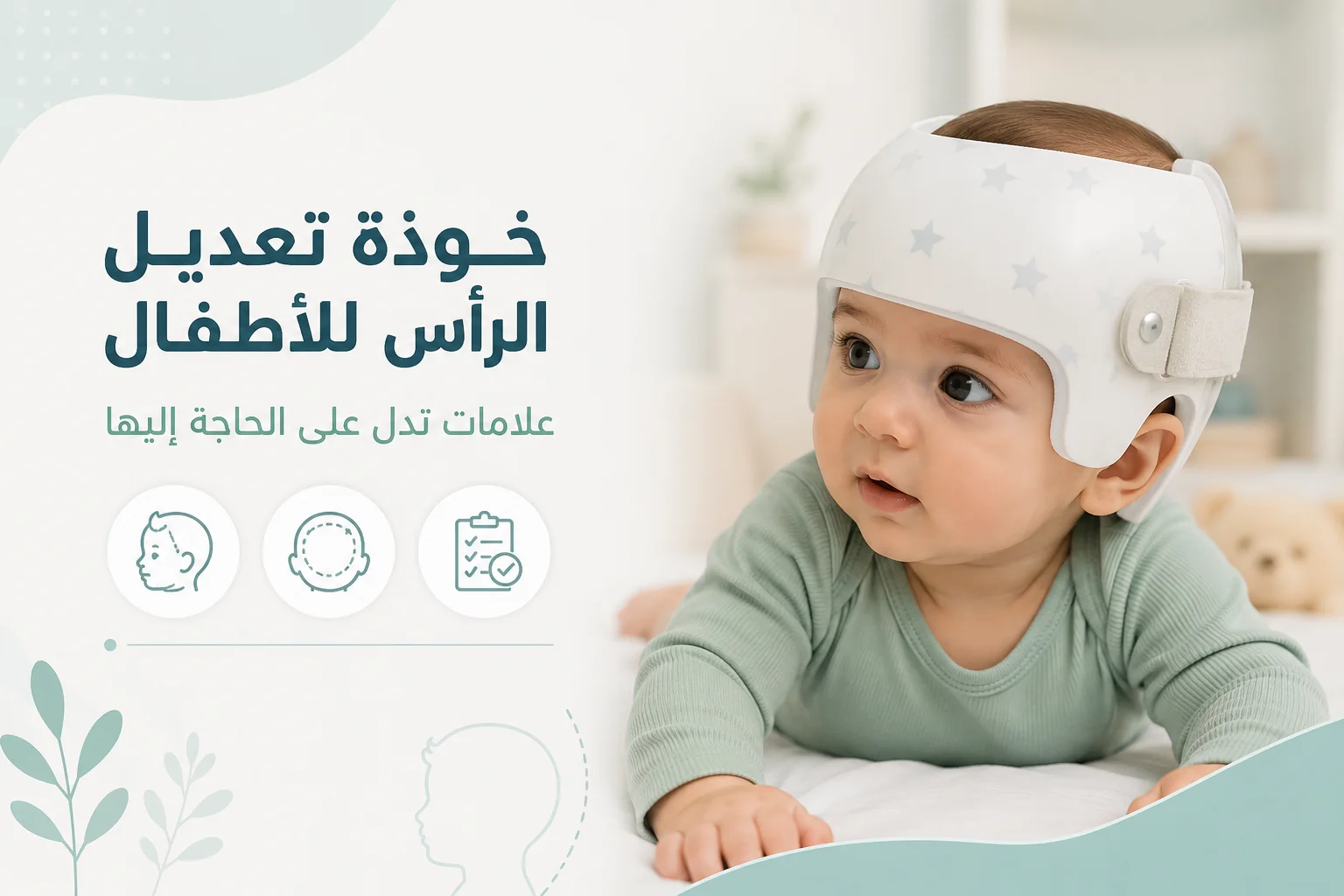
Some parents notice flattening on one side or at the back of their baby's head during the first months. In many cases it improves with growth and appropriate positioning, while other cases need early assessment to identify suitable care.
This article describes signs that may warrant assessment and when a cranial helmet may be considered.
Why head shape changes
At birth, the skull bones are flexible and not fully joined. This helps during birth and allows rapid brain growth in the first year.
The same flexibility makes the head more susceptible to changes from sustained pressure on one area, particularly while babies spend much of their time lying down. Mild flattening at the back or one side is therefore common.
Does every baby with flattening need a helmet?
No. Clinical guidance on infant head flattening considers several factors:
- The baby's age.
- The degree of flattening or asymmetry.
- The cause.
- The response to conservative measures, including clinician-directed positioning and supervised tummy time while awake.
A clinician cannot determine the need for a helmet from appearance alone; an assessment is required.
Signs that may warrant assessment
Persistent flattening
If the shape does not improve despite following positioning guidance, an assessment can help explain why and identify next steps.
Asymmetry
One side may appear more prominent, or the head may look uneven from above. Examination helps establish the cause.
Different ear or forehead positions
One ear may appear slightly farther forward or one side of the forehead may seem more prominent.
A consistent preference for looking one way
Neck muscle tightness, sometimes called muscular torticollis, can make a baby prefer turning toward one side and place more pressure on the same area of the skull.
Flattening that continues over several months
As growth progresses, treatment options change. Do not postpone assessment when flattening persists.
When might positioning be enough?
For mild cases, a clinician may recommend conservative measures before considering a helmet. These may include positioning guidance, encouraging the baby to look toward the less-used side, supervised tummy time while awake, and treatment for neck muscle difficulties if present.
The clinician reviews head shape over follow-up visits to monitor improvement.
When might a helmet be recommended?
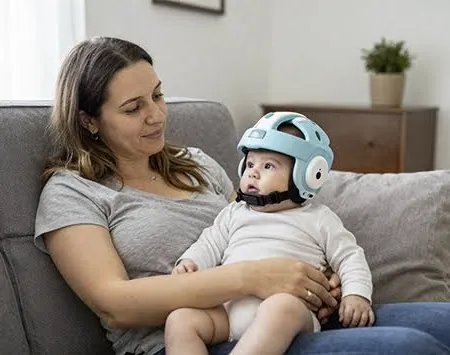
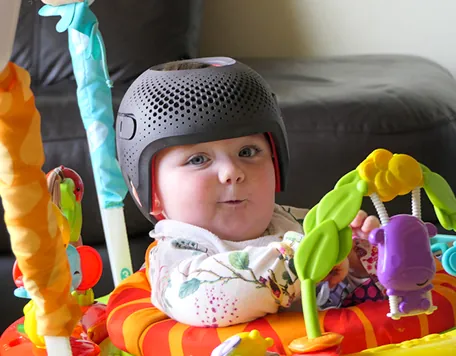
A helmet may be considered when flattening is moderate or severe, conservative measures have not helped sufficiently, the baby is at an appropriate stage of growth, and assessment indicates that a helmet is suitable.
The decision is individual. Helmets are not used for every baby with head flattening.
Why early assessment matters
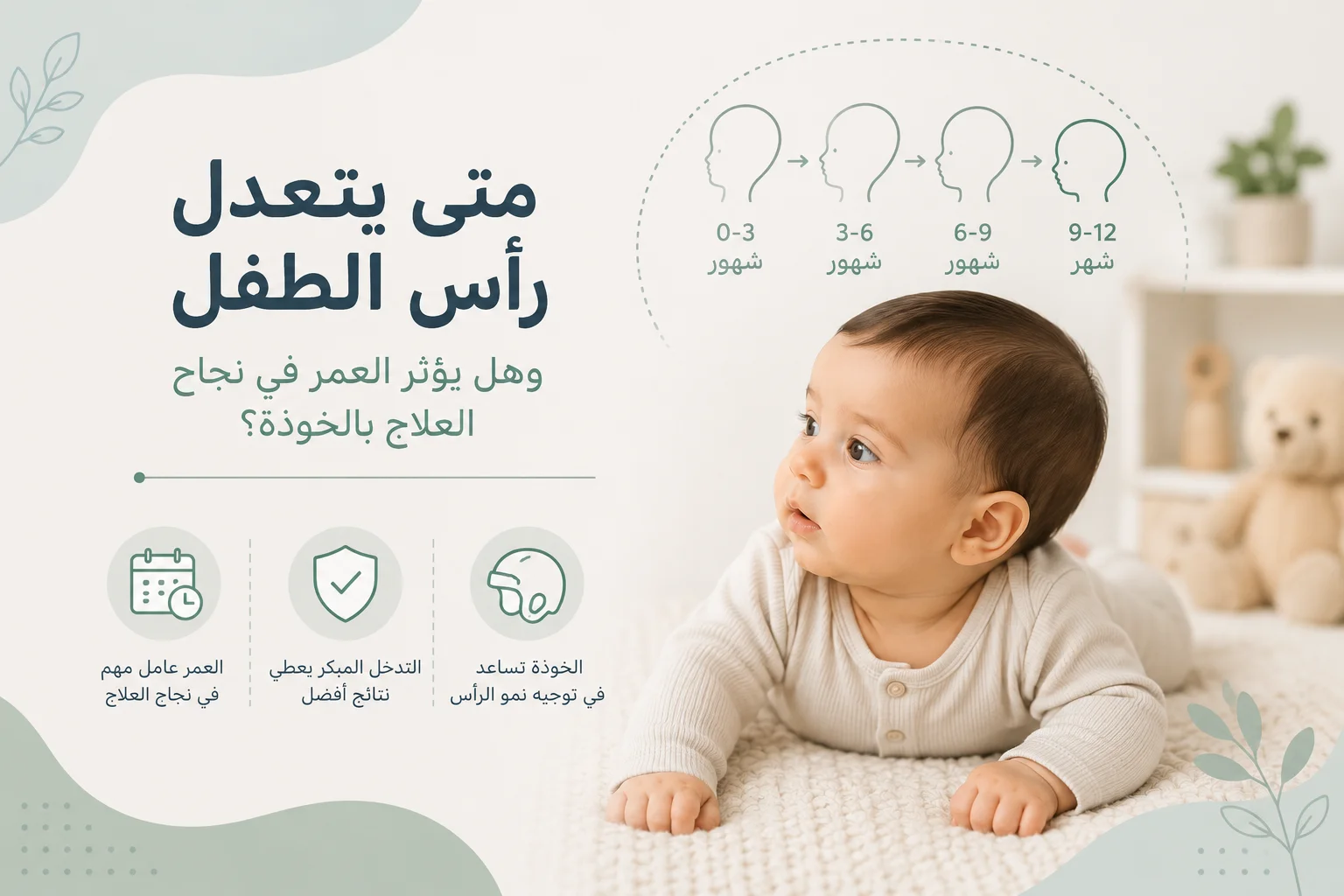
Early assessment helps identify suitable care at the right time, while the skull is growing rapidly. Delaying may reduce the usefulness of some options. A clear, persistent change in head shape should therefore be discussed with a clinician.
Does a helmet affect brain growth?
A medical helmet is designed to leave room for skull growth in the intended directions. When appropriately prescribed, fitted, and monitored, it is not intended to compress the brain or prevent growth. The American Academy of Pediatrics emphasizes assessment and treatment selected for the individual child.
Helmet therapy should be part of a professionally supervised plan, with regular checks to ensure that the fit remains appropriate as the baby grows.
When should parents arrange a visit?
Arrange an assessment if you notice increasing flattening, clear asymmetry, a persistent one-sided head preference, or no improvement despite positioning guidance. Assessment helps distinguish cases that need monitoring from those that may benefit from intervention.
Concerned about your child’s development?
Book an assessment and take the first step towards the right care for your child.